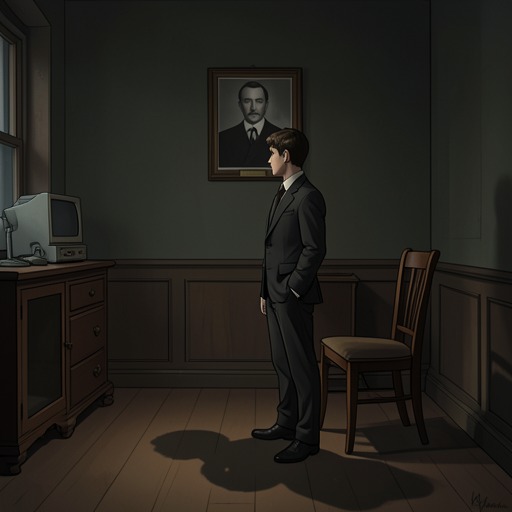
Finch’s Confrontation with His Father at His Father’s House
All the Bright PlacesTheodore Finch’s Confrontation with His Father at His Father’s House brings Finch’s strained family history into a present-tense encounter: he openly challenges his father, is attacked, and then returns to dinner rather than retreating. The scene’s violence is sudden, but its warning signs are already in the room, from the family’s careful recognition of the father’s moods to Finch’s recollection that his skull has become tough. The contrast between the assault and the father’s composed behavior at the table makes the confrontation a study in both physical power and its social concealment.
The Visit and Its Warning Signs
As soon as Finch, Kate Finch, and Decca Finch arrive at his father’s house, he senses that something is wrong. Rosemarie welcomes them into the living room, where Josh Raymond plays with a battery-operated helicopter. The noise and motion catch the three siblings’ attention: as children, they had not been allowed toys that talked, flew, or made sounds. This small domestic contrast places the father’s new household beside the childhood Finch and his siblings shared, without needing an argument to make the difference apparent.
Kate asks where their father is and notices that the grill is closed. Rosemarie says he has been home since Friday and is downstairs, handing out sodas in cans. Finch recognizes the combination of details as a sign of trouble. If his father is in the basement, Finch reasons, he may be in one of the moods that his mother used to describe as temporary: she would tell him not to mind his father and to give him time to settle down. The recollection shows how the family has learned to anticipate and manage those moods, even before the visit becomes openly hostile.
The Basement Confrontation
The basement is carpeted and brightly lit, with Finch’s father’s old hockey trophies, a framed jersey, and shelves full of books, despite Finch’s observation that his father does not read. A large flat-screen television dominates one wall. His father sits in front of it with his feet on the coffee table, shouting at a game, a beer in one hand and the remote in the other. Finch notices his purple face and bulging neck veins before addressing him. The physical details make the anger visible before either man states what he wants.
Finch stands in his father’s line of sight and waits until he looks up. When his father complains that Finch has sneaked up on him, Finch answers that he should have heard him coming down the stairs and tells him dinner is ready. He then moves in front of the screen and insists that his father come upstairs: his family has come to see him, not merely to spend time with Rosemarie and Josh. Finch later describes this as one of only a handful of times he has spoken to his father this way. He connects his unusual fearlessness to the persona he calls Badass Finch, suggesting that, in this moment, he can confront his father without being stopped by the fear that usually shapes their exchanges.
The Assault and Finch’s Return
His father responds by slamming the beer bottle against the coffee table hard enough to shatter it. He lunges, catches Finch by the arm, and throws him into the wall. Finch hears his skull crack against it, and the room spins for a moment. The argument over dinner has become an assault; the broken bottle and the impact on the wall make the change in stakes immediate and physical.
When the room rights itself, Finch tells his father that he has him to thank for Finch’s tough skull. The remark directly links the present blow to a history of being struck, but the scene does not specify other incidents. Finch gets upstairs before his father can grab him again. His escape is followed not by departure from the house but by a return to the family gathering: he is already seated at the dinner table when his father arrives.
Dinner and Aftermath
At the table, the sight of Rosemarie and Josh appears to make Finch’s father remember himself. He comments that the food smells good, kisses Rosemarie on the cheek, and sits down across from Finch, unfolding his napkin. He neither looks at Finch nor speaks to him for the rest of the visit. The ordinary gestures of hospitality resume, but they do not resolve the violence that has just taken place; instead, the father’s silence leaves the confrontation unaddressed in front of the family.
Afterward, Kate tells Finch that he was foolish to provoke their father and warns that he could have put him in the hospital. Finch replies, “Let him.” Her concern names the danger that Finch has just faced, while his answer refuses to treat that danger as a reason to withdraw. The encounter ends without reconciliation or an account of what the family will do next. Its decisive turn lies in the contrast between the father’s force and Finch’s return to the table: despite being thrown against the wall, Finch does not let the assault erase his challenge or remove him from the family gathering.